https://www.atired.com/the-ultimate-guide-to-pheromones-and-human-attraction-the-science-of-scent/
Have you ever wondered why a faint smell of body odor makes your heart beat?
In this world full of perfumes and fragrances, can we really be attracted by a certain “smell”? Scientists are studying a possible answer – pheromones . These chemical signals that are invisible to the naked eye but may affect behavior and emotions may be hidden in your sweat glands, skin, and even nasal perception.
the differences in responses to pheromones among people of different genders and sexual orientations from the perspective of neuroimaging experiments , revealing the “smell code” behind attraction.
What are pheromones? Do humans really have “olfactory attraction”?
Pheromones are common signaling molecules in the animal kingdom that are used to attract mates, mark territories, and even trigger aggressive responses. In humans, this mechanism is still controversial. However, studies have shown that certain steroid compounds, such as:
Androstenone (AND) : appears in male sweat;
Estratetraenol (EST) : appears in female urine.
It can activate areas of the human brain related to sex and emotion, such as the hypothalamus.
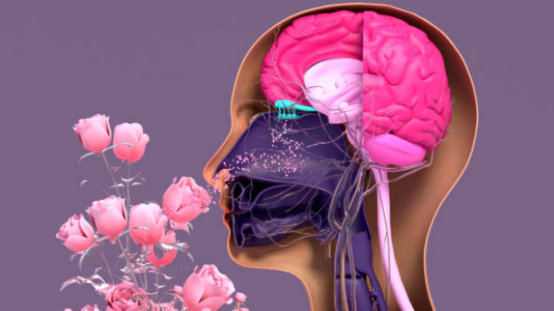
Although we don’t have a functional vomeronasal organ (VNO) like mice do , these compounds may still influence our perception and “attractiveness” of others through the main olfactory pathway .

Heterosexual men and women: The brain responds to “opposite sex pheromones”
Using brain imaging techniques (such as PET or fMRI), researchers have found that:
Heterosexual women showed significant hypothalamic activity when they smelled AND (male body odor) ;
Heterosexual men are more sensitive to EST (female body odor), and the activated areas are gender-related brain areas such as the paraventricular nucleus ;
Ordinary aromas, such as floral scents, only activate the conventional olfactory area and show no gender differences .
Interestingly, the concentration of the pheromone also affected the intensity of the response: when using natural concentrations of AND, males also showed a response, but the female response was more significant.

Homosexuals and transgender people: Brain responses reflect “gender identity”
The brain responses of homosexual and transgender individuals provide a richer dimension:
homosexual men when smelling AND was similar to that of heterosexual women , indicating that “sexual orientation” rather than “biological sex” determines the response pattern;
Homosexual women’s responses to ESTs show a “masculine” trend;
Transgender women (MtF) who are not receiving hormone treatment also have brain activation more like biological women when smelling AND .
This result suggests that the brain’s gendered response to odors is highly related to gender identity and does not entirely depend on anatomical sex at birth.

Smell and culture: Scent has no gender, but culture gives it a “label”
Does “sea breeze” represent men? Does “floral fragrance” represent women? These are not biological decisions, but cultural imprints.
Perfume brands are trying to break this stereotype:
CK One (1994) launched the slogan “Shared by Men and Women” to create a unisex fragrance;
Subsequent brands such as CK2 and Maison Margiela’s ‘Lazy Sunday Morning’ all use gender-neutral fragrances as their selling point.
Core SEO phrase embedding example :
Recommended unisex perfume brands
The role of pheromones in perfume
Analysis of sexual orientation and fragrance preference
These cases show that people’s “gender interpretation” of smells comes more from social cues rather than physiological basis, and de-gendered fragrances have become a new trend in the market.
Scientific controversy: Do we really have “sex pheromones”?
Although studies have shown that pheromones have a certain effect on the brain, there are still many doubts:
The sample size is too small to be generalized;
The experimental concentration is too high and out of touch with reality;
Inconsistency in subjective experience : having a reaction does not equal conscious perception;
Due to the lack of repeatable verification , no “hard pheromone” that is unique to humans and has universal effects has been found so far.
Scientist Wyatt clearly pointed out: “Unless it works at natural concentrations and in natural behaviors , it cannot be called a true pheromone.”
Pheromone perfumes: the gray area between science and marketing
Many so-called “pheromone perfumes” on the market claim to have added androstenone or androstenone to help “increase attractiveness to the opposite sex.”
While direct evidence is lacking, their popularity illustrates a trend: consumers are eager to use “scent” to create attraction .
The future of fragrance design may be more personalized:
developing fragrance notes based on gender identity and sexual orientation;
Combining “masculine” and “feminine” elements to create a fluid scent;
Even customized “neuro-responsive perfumes” are created through brainwave research.
Conclusion: Attraction is diverse, and “fragrance” is just one of them
The human pheromone response demonstrates an important fact: attraction is not a single mechanism, but the result of the combined action of physiological, cognitive and cultural factors .
People of different genders and sexual orientations respond differently to pheromones at the brain level;
But this does not represent some kind of “superiority” or “standard”;
It just shows that everyone has a unique olfactory language and emotional map when perceiving the world .
In a world where fragrance and desire are intertwined, let us learn to appreciate the imperfect, uncertain, but real and diverse attraction.
Recommended further reading:
Gender-neutral perfume recommendations
How does smell affect our brain’s decision making?
Do pheromone perfumes really work? A scientific analysis
https://www.atired.com/the-ultimate-guide-to-pheromones-and-human-attraction-the-science-of-scent/