https://www.atired.com/the-ultimate-guide-to-pheromones-and-human-attraction-the-science-of-scent/
Behind the advertisements for perfumes that are labeled “temptation”, “attraction” and “primitive impulse”, the word pheromones is quietly infiltrating our daily lives. Many perfume brands claim that their formulas contain “human pheromones” that can trigger other people’s instinctive affection and desire, especially for women. But the question is: Can pheromones really make women “sexually aroused”? Or is this all just a beautiful marketing myth?
Today, we will not talk about metaphysics, but only science.
1. What are pheromones? The “silent language” from animals to humans
In simple terms, pheromones are chemical signals released by organisms that can trigger specific behavioral or physiological responses in individuals of the same species. Examples abound in the animal kingdom: pheromones secreted by female mice can instantly excite male mice; and androstenone secreted from the nasal cavity of boars can put sows into mating positions on the spot.
- Traditionally, pheromones are divided into four categories:
- Releasers: trigger rapid behavioral responses, such as sexual behavior or aggression;
- Modulator: changes mood or physiological state, such as relaxation or alertness;
- Signaler: Marks identity, gender, race, etc.
Primer: A hypothesis that affects hormone levels or cycles, such as menstrual synchronization between women.
In humans, researchers have identified some steroidal substances (such as androstenone, androstenol, androstenedione, etc.) as “candidate pheromones”, which are mainly found in sweat, armpits, saliva and other body fluids. There is also a pheromone that is believed to be related to women, called estratetraenol, which has also gradually surfaced in research.
2. How do pheromones affect female sexual arousal? A secret path to the brain
You may ask: How do these molecules make people “feel”?
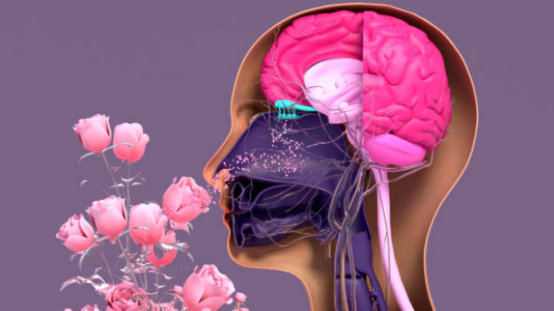
Although mammals mostly receive pheromone signals through the nasal septum organ (VNO), the human VNO basically degenerates after adulthood and cannot connect properly to the brain. Therefore, pheromones are believed to enter the brain through the conventional olfactory system .
These signals are first received by the olfactory epithelium of the nasal cavity, then transmitted through the olfactory bulb to the limbic system and hypothalamus – the “brain emotional center” that manages emotions, sexual desire, and endocrine system.

In a classic fMRI study, when women smelled high concentrations of androstenedione, the hypothalamus and amygdala were significantly activated . These two areas are the core areas of sexual arousal and instinctive response. In other words, pheromone stimulation may give women a “subtle feeling” through the hidden channel of “emotion-hormone-sexual desire”.
In addition, after smelling these substances in the experiment, women will have typical arousal physiological reactions such as increased heart rate, increased skin conductance, and decreased skin temperature , although they often find it difficult to describe specifically why they “feel different.”
3. What does the experiment prove? Some surprising findings and sober reflections
- Let’s look at the data from a few key studies:
- Wyart et al. (2007) asked women to smell androstenedione and measured their salivary cortisol, and the results showed that cortisol was significantly elevated and the participants’ self-reported sexual arousal increased, suggesting that pheromones may affect sex-related physiology by activating the hypothalamus-pituitary-adrenal axis.
- Bensafi et al. (2004) found that only at high concentrations could androstenedione significantly enhance women’s positive emotions, accompanied by activation of the autonomic nervous system.
- Saxton et al. (2008) found in a “speed dating” experiment that women exposed to the scent of pheromones rated men’s appearance higher – although this effect was not absolute, it showed some subtle influence.
More macro data showed that in a survey of smell and sexual behavior of more than 2,000 elderly people, women with higher sensitivity to pheromones reported more sexual activity and sexual fantasies (Kern et al., 2023).
However, not all studies support the effects of pheromones. An earlier study found that some pheromones had no significant effect on female sexual arousal. This also reminds us that science cannot be led by myths.

4. The truth about pheromone perfume: scientific temptation or psychological suggestion?
If you walk into a shopping mall, you will see many perfumes claiming to contain “human pheromones”, often under the banner of “attracting the opposite sex” and “enhancing charm”. Are these products really effective?
A study analyzing 12 so-called “pheromone-containing perfumes” (Gavriș et al., 2016) pointed out that only 7 of them actually detected synthetic pheromone compounds, and the dosage was generally low.
The problem is that most brands have not made scientific explanations on the composition, content and proportion of pheromones – perfumes are confidential and their true formulas are usually difficult to know. In addition, there is currently no international standard to define the rules for the use of “human pheromones”, which gives manufacturers great room for speculation.
Therefore, the so-called pheromone perfume on the market is more like a “psychological guide” than a “biological inducer”. Whether it can make others want to get closer to you may depend more on your confidence, expectations and social context, rather than just the smell.
5. Controversial voices: Is the pheromone effect pseudoscience or a real signal?
The scientific community is still divided on whether human pheromones exist:
Opposing view: It is pointed out that the human VNO is degenerated and does not have the clear instinctive reaction mechanism of animals. In addition, the current research sample is small and the reproducibility is poor, so it is difficult to prove that pheromones are really effective in humans. Some studies use experimental odors that are 100 times higher than the natural dose, which is easy to produce “unnatural” stimulating effects.
Supporting viewpoint: Emphasize that multiple neuroimaging, endocrine and behavioral studies have indeed observed “some effects”, even if the effect is weak, it should not be ignored. And even if humans mainly receive pheromones through conventional olfactory channels, this does not mean that the pheromone mechanism is invalid, but it is more complex and more regulated by psychological factors.
At present, we can reasonably believe that humans may have some form of pheromone perception mechanism, but this mechanism is not equivalent to the “sexual start button” at the animal instinct level , but is more like an auxiliary signal for regulating emotions and increasing intimacy.
Conclusion: The real attraction may not only come from the aroma
Pheromone research has opened a door to “unconscious attraction” for us. It is both the boundary of science and a metaphor for human desire. But we should also be cautious: if perfume becomes the sole sustenance of desire, then are we ignoring true intimacy, communication and resonance?
Perhaps, what really moves you is not the bottle of pheromone perfume, but the fact that after spraying it, you begin to believe that you are worthy of love and attention.
https://www.atired.com/the-ultimate-guide-to-pheromones-and-human-attraction-the-science-of-scent/