
https://www.atired.com/the-ultimate-guide-to-pheromones-and-human-attraction-the-science-of-scent/
The study of pheromones can be traced back to the early 19th century. At that time, French naturalist Jean Henri Fabr é discovered in experiments that a female emperor moth could attract dozens of male moths. Even if the female moth is kept in a cage and partially covered, the male moth can still fly towards it accurately. This phenomenon led him to speculate that this attraction may originate from some chemical signal, rather than just visual or auditory stimuli.
Breakthroughs in Modern Informatics Research
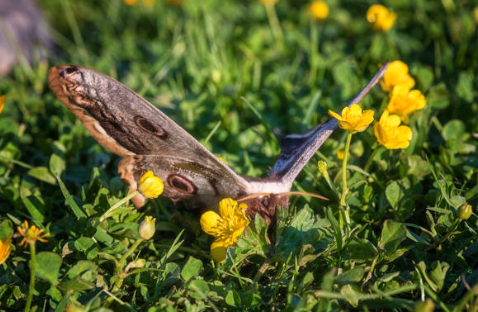
It was not until the late 1950s that a research team led by German scientist Adolf Butenandt successfully extracted and identified the insect pheromone Bombykol for the first time. Its chemical composition is trans-10, cis-12-hexadecenol. The research process was extremely difficult, as the team used over 300000 female silkworm moths to extract 5.3 mg of silkworm moth alcohol. However, even with such trace amounts of chemicals, female silkworm moths can still attract male moths over long distances after release.
This breakthrough discovery laid the foundation for pheromone science and sparked a research boom on whether other organisms, including humans themselves, are also affected by pheromones.

Do humans also have pheromones?
Despite the significant role of pheromones in insects, the impact of pheromones on mammals and humans remains controversial. Scientists have studied chemicals such as Androstadienone and Estratetranol and found that they may have subtle emotional and behavioral effects on the opposite sex. However, unlike insects, human social behavior is influenced by multiple factors such as culture, cognition, and emotion, so the role of pheromones is not as direct and significant as in insects.
The discovery of pheromones not only helps us understand the communication methods in the animal kingdom, but also prompts scientists to explore potential chemical signals in humans. Although research on human pheromones is still ongoing, it is certain that the role of scent in social attraction is far more complex than we imagine.
https://www.atired.com/the-ultimate-guide-to-pheromones-and-human-attraction-the-science-of-scent/